Internet Accessibility Expands in Rural Areas Globally
Introduction
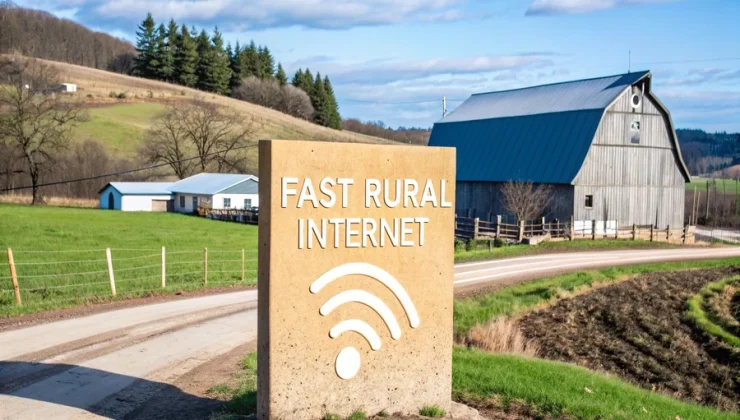
There is an Increased Internet Accessibility in the rural settings where governments, organizations and technology suppliers strive to eliminate the digital divide. Rural communities had over years had little or no access to a stable internet, limiting their education, business, and communication opportunities. This is no longer the case today as infrastructure and technology have been improved. With connectivity to far-off locations, it is changing everyday life and providing a new opportunity to grow and develop.
Expansion of Internet Infrastructure to Rural Areas
Development of infrastructure is a major factor that has contributed to the growth of internet connectivity in rural regions. Governments and businesses are making investment in broadband networks, fiber optic and wireless in order to access underserved populations.
The development of satellite internet and mobile networks is also contributing greatly. The technologies enable connectivity in places where conventional infrastructure is hard to establish.
With the advancement in infrastructure, additional households and businesses are getting access to trustworthy internet services, narrowing the divide among cities and rural regions. Discover new perspectives on pressvibepulse com.
Effect upon Education and Learning Opportunities
Better access to the internet is changing education in the rural setting. Online learning and educational materials and virtual classrooms are now accessible to students. This assists in closing the rural and urban education systems.
Digital tools also help teachers to improve their teaching processes and to access new materials.
Remote learning opportunities enable students to further their education despite the low access to schools due to physical restriction. This is especially significant in areas that have less education institutions.
Business Development and Economic Gains
Internet connectivity is providing rural communities with new economic opportunities. The online platforms enable small businesses to access broader markets, boosting sales and exposure.
Business owners can establish and operate business remotely and do not have to move to the city.
Digital tools are also benefiting agriculture, which is a major industry in most rural areas. Farmers are able to get market data, weather conditions and the new methods of farming, which enhances their productivity and earnings.
Such innovations help in the growth and stability of the entire economy in the rural regions.
Better Social Connections and Communication
The internet boosts communication and social interaction. Messaging applications, social media and video calls allow people in rural areas to be in contact with their friends and family.
This connectedness decreases isolation and enables people to be aware of local and global events.
Access to information also empowers communities through provision of health knowledge, education and social services. Such enhanced communication is a significant factor in community building.
Difficulties in extending Internet Access
Even now, there are challenges encountered in terms of increasing internet penetration to rural communities. Development of infrastructure may be costly particularly in isolated or inaccessible areas.
Lack of technical skills and resources in maintenance may influence quality of services and reliability.
Another consideration is affordability. Some households might not afford internet services even in cases where they are available.
These challenges must be tackled through further investment, innovation and government and private sector cooperation.
Technology and Innovation Role
The technological innovations are simplifying the process of increasing internet access. Low-earth orbit satellites, and better wireless networks are some of the innovations that are aiding in reaching remote areas in a more efficient manner.
Mobile technology is also coming to the forefront, with smartphones the internet connection being made without a high degree of infrastructure.
Applications and digital platforms are being developed to be usable in the low-bandwidth environment, making them useful even with low connectivity.
These inventions are hastening the growth of the internet as well as enhancing the quality of the services.
Outlook of Rural connectivity in the future
The prospects of internet penetration in rural areas are bright with more investment and innovations being developed. Digital inclusion is being given a high priority by governments and organizations as a wider development agenda.
With the advancement in connectivity, the rural regions will see more opportunities in education, healthcare and business.
Eliminating the digital divide will help achieve a more equal economic growth and social advancement.
The ongoing work will be crucial to make sure that whole communities benefit from digital transformation. This includes improving access to tools, skills, and resources so that technological progress does not remain limited to a few groups but is shared more broadly across society. In this context, online platforms such as decoupage reflect how digital access can help people engage with creative and practical resources more easily, supporting wider participation in the benefits of an increasingly connected world.
Final Thought
The spread of internet connectivity in rural communities is a major move towards having a more linked and all-inclusive world. Though there are still difficulties, the developments that have been achieved to date point to the possibility of positive change. Societies can guarantee that the rural population has equal access to opportunities in the digital era by further investing in infrastructure, technology, and education.
FAQs
Why is internet access important in rural areas?
It provides access to education, business opportunities, communication, and essential information.
How is internet accessibility expanding in rural regions?
Through investments in infrastructure, satellite technology, and mobile networks.
What benefits does internet access bring to rural communities?
It improves education, supports businesses, and enhances communication and social connectivity.
What challenges exist in providing rural internet access?
Challenges include high costs, infrastructure limitations, and affordability issues.
How does internet access impact rural education?
It enables online learning, access to resources, and improved teaching methods.
What is the future of rural internet connectivity?
The future includes wider access, better technology, and increased opportunities for development.