Is Aluminum Magnetic? Click to find out more
Aluminium is a very famous element that has its first usage in our daily life. It is used in the manufacturing of aeroplanes, motor vehicles, kitchen items, and even mobile phones. Nowadays, they have also been extensively used in manufacturing rust-free doors and windows. We are already familiar with the physical properties of aluminium, like it is lightweight, glittery, easy to manipulate, etc. But there is always one question that remains unanswered: Is aluminium magnetic?
Many people think that not all metals are magnetic. And that’s completely untrue. One of the common examples is aluminium. If you experimentally see its magnetic property, you will be surprised. When the aluminium is exposed to a magnet, you will be astonished to see that this metal behaves very strangely then the rest of the metals.
Is Aluminum Magnetic or Not?
The straightforward answer is no, aluminum is not a magnetic element. When you get a magnet close to aluminum, nothing happens. It will not adhere and will not appeal at all.
This is what distinguishes aluminum among the magnetic metals such as iron, cobalt, and nickel.
Does Aluminum Stick to a magnet? – no. Nevertheless, it is even more interesting when we go deeper into the science behind it.
Why Aluminum Is Not Magnetic
- To understand why aluminum is not magnetic, we have to look at the atomic structure of aluminum.
- The injected materials have loose electrons and therefore get attracted by the magnets, which produce magnetic fields. In the case of aluminum, all the electrons are paired, and hence its magneticity is canceled.
- Therefore, aluminum becomes a paramagnetic material. It means that it’s not very sensitive to the existence of magnetic fields. The answer is so dull that one can not see it with typical apparatus.
The Interaction of Aluminum with a Magnet.
- Nevertheless, although aluminum material itself does not have a magnetic property, it will magnetically react with magnets under some conditions.
- Eddy currents are defined as a small current within the material caused by the motion of a high-speed, strong competitor magnet in the proximity of an aluminum.
- The cause of these currents is that they generate their field of magnetism, and this is contrary to the movement of the magnet.
- The induced effect makes the magnet decelerate or float in a slight propensity when passing through aluminum.
- It is an interesting demonstration of working physics – not really magnetism, but electromagnetic induction.
Where This Effect Can Be Observed.
- Magnetic Brakes
Other roller coasters and trains have aluminum plates with magnets to safely decelerate.
- Metal Sorting Machines
The recycling plants employ the use of magnetic mechanisms in releasing aluminum, among other metals.
- Physics Experiments
Learners tend to experiment with aluminum tubes and magnets to learn about the effects of electromagnetism.
- Electric Motors
In electric motor systems, Aluminum components are used to limit heat and electric current flow.
Aluminum does not adhere to the magnets, but it is useful in the magnetic systems.
Administrative Major Properties of Aluminum.
- Lightweight and strong
- Non-magnetic
- Corrosion-resistant
- Superior heat and electricity conductor.
- Easy to machine and shape
These characteristics render aluminum suitable for such industries as building, aerospace, and electronics.
Aluminum in CNC Machining
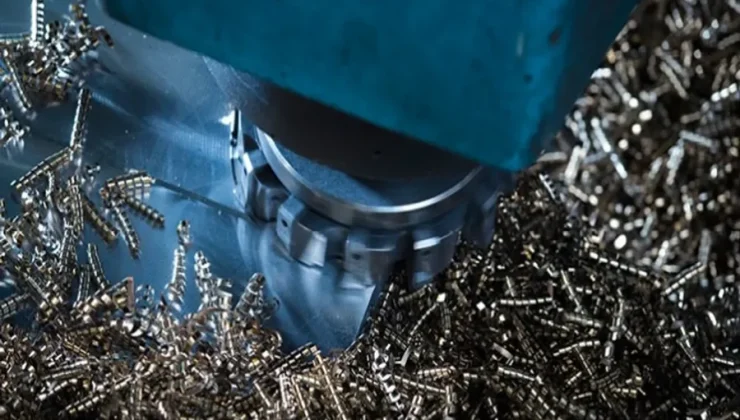
There is no better material to machine CNC than aluminum due to its softness and good machinability. It is easy to cut, drill, and shape it into complicated shapes without becoming weak. Different manufacturers apply it in making Custom CNC Aluminum Parts in different industries such as automotive, aerospace, and robotics.
Due to the non-magnetism of aluminum, it can also be used in sensitive plastic electronics and medical devices that should not have magnetic interference.
Aluminium Alloys and Magnetism.
In some instances, it seems to the people that aluminum alloys may behave differently. Alloys are blends of aluminum and other metals such as magnesium, silicon, or copper.
In as much as alloys can modify the strength and corrosion resistance, they do not render aluminum magnetic.
It takes a lot of magnetic metal, such as iron or nickel, to become magnetized, and that is an exception rather than the norm amongst aluminum alloys.
Experience the magnetic Behavior of Aluminum.
This can easily be tested at home. Use a magnet in the fridge and rub it against a soda can made of aluminum. There will be no attraction for you.
This was merely a test that indicates that aluminum is not a magnet. But when a magnet is thrown down the tube made of aluminum, the magnet passes softly because of eddy currents. And that is electromagnetic intercourse– not magnetism.
Non-magnetic characteristics of Aluminum in industry.
The non-magnetic characteristic of aluminum is what contributes to its usefulness in any non-noise industry where noise disturbance is an issue.
It’s used in:
- Airliners, to maintain the stability of navigation.
- Magnetic materials are not applicable in medical apparatus, e.g. MRI machine.
- Electronics, to shield and have lightweight cases.
- Electrical machine Systems, non-magnetic connectors, and frame.
This not only makes aluminum a safe material, but it is also needed in various high-tech applications.
Aluminum Precision and CNC Machining.
With CNC technology, more precise and detailed parts of aluminum are easy to make.
High accuracy and smooth finishes on Custom CNC Aluminum Parts are produced. This enables them to be perfectly fit in the modern machinery, and they do not cause any additional weight or magnetic disturbance.
CNC machining also lowers the wastage, so that the production of aluminum will be more cost-effective and environmentally friendly.
Conclusion
So, is aluminum magnetic? The clear answer is no. It does not attach itself to magnets and almost does not exhibit any magnetic characteristics in normal conditions.
Nonetheless, the reaction of aluminum with the magnetic fields via eddy currents still exists, and it is applied in numerous machines nowadays. Ever wondered, Does Aluminum Stick to a Magnet? Well, now you know, it’s dubious, but it is an incredible and most useful metal.
Since airplanes to electronics and Custom CNC Aluminum Parts, aluminum is one of the most diverse materials in the world, light, strong, well, non-magnetic.