The Brain Trick That Makes Luckiness Seem Like Destiny.
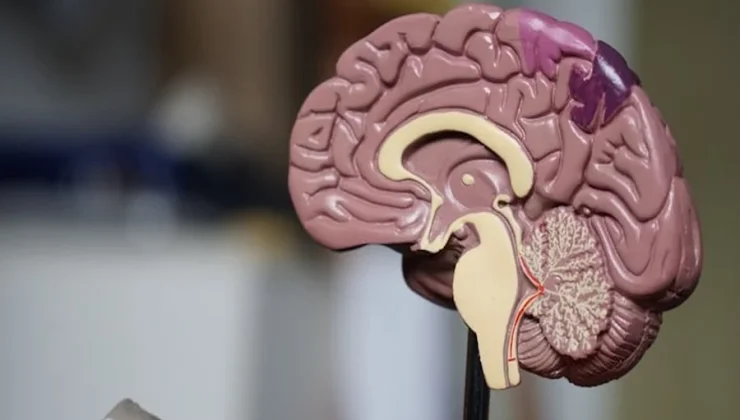
Have you ever been at a spinning wheel, a shuffled deck, or even on your phone notifications, and felt like you are about to hit on a streak? It is not only your imagination that sense–that chance has a design–lives. It is a mental deception our brains have employed on us, and it can be an interesting discovery into why we are so obsessed with playing games, using digital platforms, and engaging with reward systems.
The Mirage of Foreseeability.
Randomness is, at first sight, random. The roll of dice does not retain the previous roll, slot machines do not prefer a hot line and social media algorithms do not allow you to click or scroll. However, the human brain is programmed to pursue patterns. Our cognitive architecture is biased towards detection, not passivity, whether we are seeing predators in the wild or playing a game.
The tendency to match things can be attributed to the pattern-seeking mechanism, which is why even a recent visit to Hell Spin Casino Czech feels strangely familiar: a wave of near-misses, bonus triggers, or streaks all contribute to your feeling of predictability, although the underlying system is completely random.
The Psychological Processes of the Trick.
Pattern Recognition Bias
Man is very much better at seeing order where there is none. This is a process called apophenia, the perception of shapes in clouds, faces in car headlights, or trends in a series of roulette rolls. One particular kind of this tendency is called pareidolia, which means we are more likely to see meaningful patterns in meaningless information.
Pragmatically, when a slot machine strikes the same colour or symbol several times, your brain sends you an Aha! Message. A pattern!–although mathematically, every spin is independent. This is the bias that makes behavioural patterns in games so alluring —and why digital engagement strategies exploit them.
Illusion of Control
Pattern bias is closely related to the illusion of control. It is believed to affect the outcomes of completely random events. Whenever you find yourself deciding which slot to pick and when to spin the slot, you are letting your brain go on a dopamine loop, so that you might have a reward, which is outside your decision. This loop is driven by variable rewards—a typical casino mechanic—that keeps players entertained and coming back.
Confirmation Bias When Characteristics are Random.
When you believe you have noticed a pattern, the confirmation bias intervenes. Your brain picks up on hits that align with your perceived trend and conveniently ignores losses that run counter to it. This selective focus strengthens the trick of predictability, which is implicitly invited by repetition and immediate satisfaction.
Neuroscientific Perspective
It is not just a psychological love of patterns, but it is biological.
Reward Prediction and Dopamine.
Dopamine is not merely a happy hormone; it plays a central role in learning and in the anticipation of reward. Dopamine spikes when we expect a reward—a bonus round, a jackpot, a pleasing notification, and so on—reinforcing behaviour. Even when the outcome is random, the brain’s reward system perceives it as predictable.
Pattern Detection Neural Basis.
Brain imaging reveals that the prefrontal cortex and striatum overwork during pattern recognition. The prefrontal cortex is where possible strategies are considered, whereas the striatum processes the casino player rewards. In the online space, this duo of elements transforms innocent fun, such as spins at Hell Spin Casino Czech, into a cognitively elating experience, without the prospect of winnings.
Digital Environment.
Randomness is not necessarily only in physical games. Digital platforms have perfected the art of exploiting pattern perception.
Web-Based Casinos and Behavioural Design.
Cognitive biases are exploited on sites such as Hell Spin Casino Czech. Their reward systems, progress meters, and surprise bonuses are intended to deliver variable rewards that sustain the dopamine loop. The brain sees patterns where there are none, and the feeling of the session is a series of nearly predictable victories.
RNGs, Roulette and Slot Machines.
Streaks are observed even with random number generators (RNGs) that guarantee independent results. The following is a rough division between perceived and actual randomness:
| Game Type | Perceived Pattern by Players | Actual Probability | Example of Reward Trigger |
| Slot Machines | Hot streaks / cold streaks | Independent spins | Bonus rounds / jackpots |
| Roulette | Hot numbers | Random per spin | Winning streak incentives |
| Online Card Games | Predictable draws | Shuffled decks | Loyalty rewards / bonuses |
Randomness and perceived patterns are not limited to gambling. Social media notifications, feeds, and even in-game rewards are based on the same cognitive biases. Any unforeseen message or success excites the anticipation system of the brain, hence leaving users addicted. The rule is the same: unpredictable rewards produce the perception of control and encourage interaction.
Expert Assessment
The psychologists who have examined decision-making and digital habits observe that such a sense of predictability is not necessarily bad. Still, when coupled with immediate satisfaction and a variable-reward structure, it can lead to compulsive behaviour. Being aware of cognitive biases in the workplace helps both gamers and online shoppers recognise that randomness is not random and that some sites are impossible to resist.
Specialists also point out that sites like Hell Spin Casino Czech are keen on creating experiences that respect randomness and, as much as possible, aim to increase engagement. These mechanics can also be studied to become a more aware consumer in the digital realm, whether through reading an online source.