Why Are Craft Breweries Accidentally Destroying Their Local Water Tables?
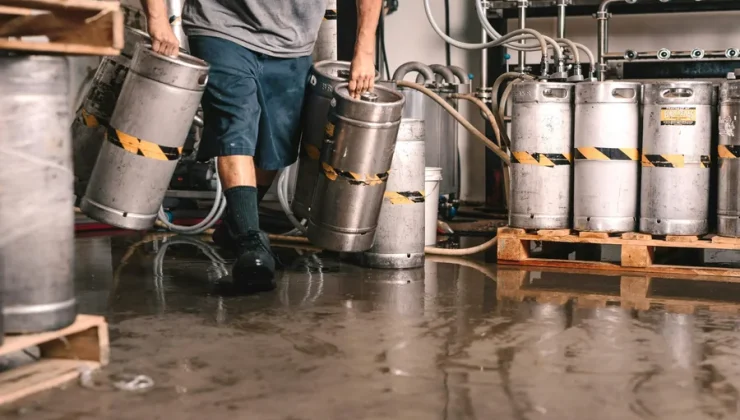
The craft beer revolution has transformed the American landscape. In converted warehouses, rural barns, and downtown basements, passionate artisans are turning hops, grain, and water into liquid gold. It is an industry built on flavor, community, and a distinct sense of place. But behind the romance of the taproom lies a dirty, biological secret that is threatening the very land these breweries stand on.
While brewers obsess over the water profile going into the beer, far fewer pay attention to what goes down the drain. The result is a growing environmental conflict where the success of a local business can inadvertently poison the local groundwater.
The issue is not maliciousness; it is chemistry. To a standard waste system, beer is not a beverage. It is a biological bomb.
The “Sugar Shock” Factor
To understand why breweries are such a threat to infrastructure, you have to look at Biochemical Oxygen Demand (BOD). This is the measure of how much oxygen bacteria need to break down organic matter in water.
Standard residential wastewater—the stuff from your toilet and shower—has a BOD strength of about 200 to 300 milligrams per liter. It is relatively weak.
Brewery wastewater, however, is a different beast. It is loaded with “trub” (heavy fats and proteins from the boiling process), spent yeast, and sugary wort. This cocktail can have a BOD strength ranging from 10,000 to 50,000 milligrams per liter. When this high-strength waste hits a standard treatment system, it is the biological equivalent of feeding a diabetic a ten-pound bag of sugar in one sitting.
The bacteria in the tank, which are responsible for breaking down waste, are overwhelmed. They consume all available oxygen instantly in a feeding frenzy and then die off. Once the bacteria die, the treatment process stops. The system goes septic in the worst way, and raw, untreated wastewater pushes out into the leach field and, eventually, the groundwater.
The pH Rollercoaster
The assault doesn’t stop with sugar. Brewing is a process of extremes. To clean the massive steel fermenters, brewers use caustic soda (very high pH). To sanitize them, they use phosphoric or peracetic acid (very low pH).
A healthy waste system relies on a neutral pH balance (around 7) to keep the microbial colony alive. A brewery sends waves of scalding hot, highly acidic, and then highly basic water down the pipes multiple times a day.
This “pH rollercoaster” creates a sterile environment where nothing can survive. If the system relies on a concrete tank, the acids can even eat through the physical structure of the container, causing it to crumble and leak untreated industrial waste directly into the soil.
The Rural Renaissance Problem
This problem is acute because of where breweries are being built. The current trend favors “farm breweries” and destination taprooms in rural areas that are not connected to municipal sewer lines. These businesses rely on onsite wastewater systems.
A rural septic system designed for a three-bedroom farmhouse cannot handle the output of a 2,000-barrel-per-year production facility. Yet, due to zoning loopholes or oversight, many start-ups inherit these inadequate systems. They might operate unnoticed for a year or two, but eventually, the soil becomes clogged with the heavy organic load (a “biomat” failure), and the wastewater surfaces on the lawn or backs up into the facility.
The Cost of Side-Streaming
The solution to this problem is neither simple nor cheap, which puts small business owners in a bind. Responsible water stewardship requires “side-streaming.” This involves separating the high-strength waste (yeast and trub) from the standard wash water.
Farmers will often take the spent grain for feed, but the liquid slurry is harder to dispose of. Some breweries install massive aeration tanks to pump oxygen back into the waste, artificially lowering the BOD before it hits the ground. Others act as their own treatment plants, using pH-balancing holding tanks to neutralize the acids and bases before releasing the water.
However, for many breweries, the only viable option is to treat their plumbing as an industrial hazard rather than a utility. This means installing robust pre-treatment systems and adhering to a rigorous schedule of commercial septic treatment and monitoring to ensure the solids are removed before they can suffocate the drainfield.
The Sustainable Pint
As the industry matures, the definition of “good beer” is expanding. It is no longer just about the IBU count or the rarity of the hops. It is about the footprint of the pint.
Brewers are increasingly realizing that they are water managers first and beer makers second. Protecting the water table isn’t just a regulatory hurdle; it’s a survival strategy. After all, beer is 95% water. If a brewery destroys its own aquifer through negligence, it isn’t just ruining the environment—it’s ruining the main ingredient for the next batch. The future of craft beer depends on keeping the ground as clean as the glass.