A Complete Guide to Water Damage Restoration in Work Properties
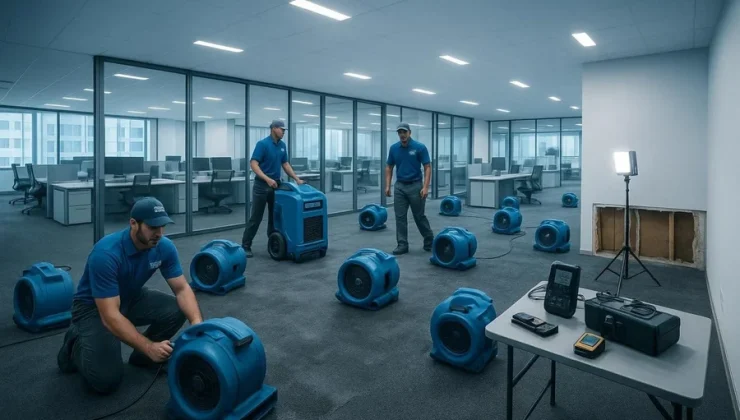
Water damage in work properties-offices, warehouses, or retail spaces-can stop operations, ruin equipment, and create health risks. What does restoration involve for these buildings? It’s a full, step-by-step process to bring the space back to its pre-loss state after water gets in. It goes far beyond mopping.
Teams check how far the damage has spread, remove standing water, dry all wet areas, sanitize to prevent mold, then repair and rebuild damaged parts. The goal is to limit long-term harm, protect the building, and keep people safe. This often includes add-on services like balcony waterproofing to help prevent future leaks.
Knowing this process is very important for business owners. Fast action can cut costs and reduce downtime. If you ignore water damage or wait too long, small issues can turn into big problems-musty smells, ongoing dampness, mold, and even structural failure.
Overall, water damage restoration in work properties is a smart investment in safety, building life, and business continuity.
What Does Water Damage Restoration Involve for Work Properties?
Water damage restoration in work buildings is a specialized service that carefully handles the aftermath of leaks, spills, or floods.
The approach is organized: quick damage control, drying with professional equipment, thorough cleaning and sanitizing, and then repairs to bring the building back to its original condition. This full process deals with visible water and hidden moisture, which can lead to mold and long-term damage if left behind.
This work is harder than many think. It takes knowledge of building materials, types of water, and how secondary damage begins. Pros use the right tools and methods to remove moisture and treat all affected areas. This careful approach helps stop future problems and keeps the space safe for workers and visitors.
How Does Water Damage Affect Commercial Buildings?
Water damage can hit commercial buildings hard. It can weaken structure, stop work, and affect health. These properties often have complex electrical systems, machinery, electronics, and large inventories-things that do not tolerate moisture. Even small leaks can grow into costly repairs if left alone.
Water can weaken walls, ceilings, and floors. Drywall, wood, and insulation soak up water, swell, warp, and break down. Water often travels into hidden spaces and feeds mold and mildew. Work can stop, income can drop, and teams might need to relocate.
Equipment and important documents can be ruined. Contaminated water can also bring mold or bacteria, raising health risks and legal exposure. So, water damage is more than cosmetic-it can threaten a business at its core.
Key Differences Between Residential and Work Property Water Damage Restoration
The basics are similar for homes and workplaces, but work properties bring different challenges. Commercial buildings are larger and often have more complex HVAC and electrical systems, plus higher-value assets and data.
Speed matters more for businesses. Every hour of downtime costs money, so fast response and efficient work are key. Restoration often involves many parties-owners, insurers, staff, and sometimes regulators. The scope can include industrial equipment, big structural elements, and strict cleaning needs. Health and safety standards are higher too. For these reasons, commercial restoration usually needs a larger team with wider skills and industrial-grade tools, working on an accelerated schedule.
What Are the Major Causes of Water Damage in Work Properties?
Knowing what causes water damage helps you prevent it and respond quickly. Water can come from many places, from small internal leaks to major weather events. If you know the common causes, you can spot risks early and act before a small issue turns into a major event. A dripping pipe and a large flood both cause damage, but each needs a specific response.
Restoration pros such as Nova Construction Services move fast to find the source. Finding where the water comes from helps with immediate fixes and long-term solutions. Without this step, even a good cleanup might only hold for a short time.
Common Sources of Water Intrusion
Inside a building, plumbing problems cause many water issues. Leaky or broken pipes can drip inside walls or ceilings. Clogged drains or sewer backups can overflow. Aging or faulty water heaters may burst. Appliances like dishwashers, washing machines, and HVAC units can leak or build up condensation.
Other internal sources include damaged sprinklers, overflowing toilets, and AC condensation that doesn’t drain. These leaks often stay hidden until damage spreads. Regular checks and basic upkeep help catch them early.
How Leaking Roofs and Pipes Cause Damage
Roof and pipe leaks are common and damaging. A worn or storm-damaged roof can let rain in. Water then moves along beams, soaks insulation, stains ceilings, and can cause collapses. Poor roof drainage, clogged gutters, or badly placed downspouts make it worse by letting water pool and seep into the structure.
Pipes can leak slowly or burst. Slow leaks wear down materials, feed mold, and threaten electrical systems. Burst pipes flood fast and widely. Many leaks start in hidden places like attics, wall cavities, or crawl spaces. By the time you see a stain or puddle, inside damage may already be severe.
Natural Disasters and Flood Risk Factors
Storms, heavy rain, hurricanes, and floods create high water risks. These events can overwhelm strong drainage and waterproofing. Floodwater is often “black water,” filled with contaminants and unsafe to touch. In hilly areas, mudslides can carry water and debris inside.
Storms can also tear off roofing and open direct paths for rain. Even far-off events can push up groundwater or overload city drains. Knowing local weather and flood risks helps you build a solid emergency plan and pick the right insurance. Helpful steps include good grading, foundation waterproofing, and placing key systems higher off the ground.
What Are the Signs of Water Damage in the Workplace?
Water damage is not always obvious. Many signs are small and easy to miss until the issue grows. Watching for early warnings can save money and reduce repair time. Fast detection also lowers safety risks and disruption to daily work.
Water damage can weaken the building and lead to unhealthy conditions. Train staff to spot signs and report them. A simple reporting plan helps catch trouble early and keeps people safe.
Visible and Hidden Signs to Watch For
Common visible signs include stains on walls, ceilings, or floors-often yellow or brown-and they may spread. Paint may peel or bubble. Wood floors, cabinets, or drywall may swell or warp. Cracks, sagging ceilings, and soft spots in floors or walls can show deeper damage.
Hidden signs include musty smells, which often mean trapped moisture and possible mold. Unexplained dripping sounds also point to leaks. Pros can use thermal cameras and moisture meters to find wet spots behind walls or under floors. Watching for both obvious and subtle clues helps catch issues early.
Health and Safety Risks Linked to Water Damage
Water damage can create health hazards. Mold can grow within 24-48 hours in damp areas. Mold spores can trigger allergies, asthma, and breathing issues. People may also get headaches or skin irritation. Air quality can drop fast.
Contaminated water from sewage or floods can bring dangerous germs. Standing water also raises slip risks and can be a shock hazard if it contacts electrical systems. Long-term moisture weakens floors and ceilings. Quick, professional work helps protect both the building and the people in it.
What Are the Categories and Classes of Water Damage?
Categories and classes guide how restoration should happen. Industry standards, such as those from the IICRC, set rules for safety, cleaning, and equipment. The source of the water and how much materials have absorbed matters as much as how much water is present.
These labels help pros judge health risks and build a clear action plan. They also help set the level of drying and dehumidification needed. Using the right category and class leads to safer, faster, and more effective results.
Category 1: Clean Water
Category 1, or clean water, comes from sanitary sources and is not a major health risk at first. Common sources include broken supply lines, clean sink or tub overflows, leaks from a water heater or fridge, and rain that gets in without touching dirty surfaces. Even clean water can cause harm if it sits too long. It can soak materials and lead to mold.
If cleaned up fast, damage is usually limited and easier to fix. But clean water can turn into Category 2 or 3 if it sits, warms up, or picks up contaminants from surfaces.
Category 2: Gray Water
Category 2, or gray water, has some contamination and can make people sick if touched or swallowed. Sources include washing machine or dishwasher overflows, toilet water with urine only, seepage from pressure, or a broken aquarium. It may contain chemicals or microbes.
Gray water requires stronger cleaning. Porous items like carpet, drywall, and insulation often must be removed. Non-porous surfaces need careful cleaning and sanitizing. If left alone, gray water can turn into Category 3.
Category 3: Black Water
Category 3, or black water, is highly contaminated and unsafe. It may contain harmful pathogens and chemicals. PPE is required for anyone involved. Sources include sewage backups beyond the trap, floodwater from rivers or the sea, storm water, or long-standing stagnant water.
In these cases, porous materials touched by the water are discarded. Non-porous surfaces need heavy cleaning and disinfection. Health protection is the priority. After major events, rebuilding can be extensive.
| Category | Water source | Common sources | Typical actions |
| Category 1 (Clean) | Sanitary | Supply lines, clean overflows, appliance leaks, rain | Fast extraction and drying; monitor for mold |
| Category 2 (Gray) | Some contamination | Washer/dishwasher overflows, toilet (no feces), seepage | Remove affected porous materials; clean and sanitize |
| Category 3 (Black) | Heavily contaminated | Sewage, floodwater, storm water, stagnant water | Discard porous items; full disinfection; PPE required |
Water Damage Classes Based on Saturation and Absorption
Classes describe how much water has been absorbed and how hard drying will be. There are four main classes:
- Class 1: Least Amount of Water. Less than 5% of surfaces with wet porous materials. Often a small clean spill on tile. Drying is quick.
- Class 2: Significant Amount of Water. About 5% to 40% of the area is wet. Water often wicks into walls and carpets. Stronger dehumidification and airflow are needed.
- Class 3: Greatest Amount of Water. More than 40% is wet, often from above. Many materials are saturated. Heavy equipment and longer drying times are common.
- Class 4: Deeply Bound Water. Materials like plaster, wood, concrete, and masonry hold water deep inside. This needs special drying methods and longer time.
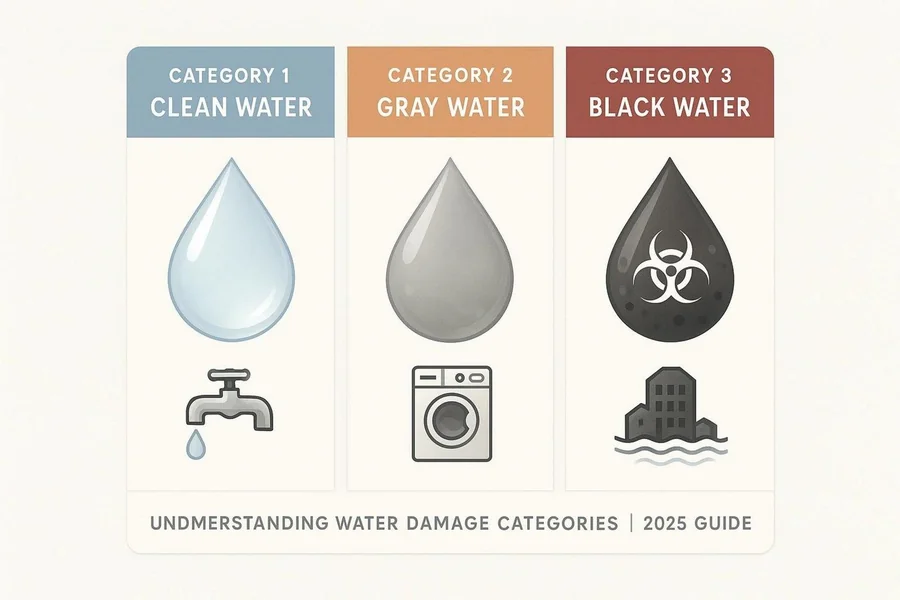
Choosing the right class guides the drying plan so hidden moisture is removed and mold or structural issues do not develop later.
What Steps Are Involved in the Water Damage Restoration Process?
Restoration is a clear, step-by-step process to turn a wet, unsafe area back into a dry, usable space. It takes training, the right tools, and steady checks to remove both water and contamination. From the first visit, the team follows a set plan to bring the building back.
Knowing these steps helps owners understand what is happening and why each stage matters. Each stage builds on the last until the property is fully restored, both in look and in structure.
Step 1: Inspection and Damage Assessment
The first and often most important step is a detailed inspection. Pros arrive and perform a full check of the site. Using moisture meters and infrared cameras, they find the source, track hidden moisture behind walls or under floors, and map how far water has traveled. This first check matters because much of the damage is not visible.
During this step, they identify the water category (1, 2, or 3) and the class (1-4). This matters because it guides safety steps, cleaning needs, and the level of drying required. A checklist helps keep this work organized and documented. This careful inspection leads to a clear, effective plan that limits downtime and protects the building.
Step 2: Water Extraction and Removal
After the source is stopped and the plan is set, the next step is fast water removal. Getting rid of standing water quickly limits further soaking and slows mold growth. Large pumps and wet vacuums remove pooled water.
Then, portable extractors pull moisture from floors, carpets, and upholstery. Even when surfaces look dry, materials can still hold water. Moisture meters help check progress. The faster this step happens, the shorter the overall drying time and the lower the chance of extra damage.
Step 3: Drying and Dehumidification
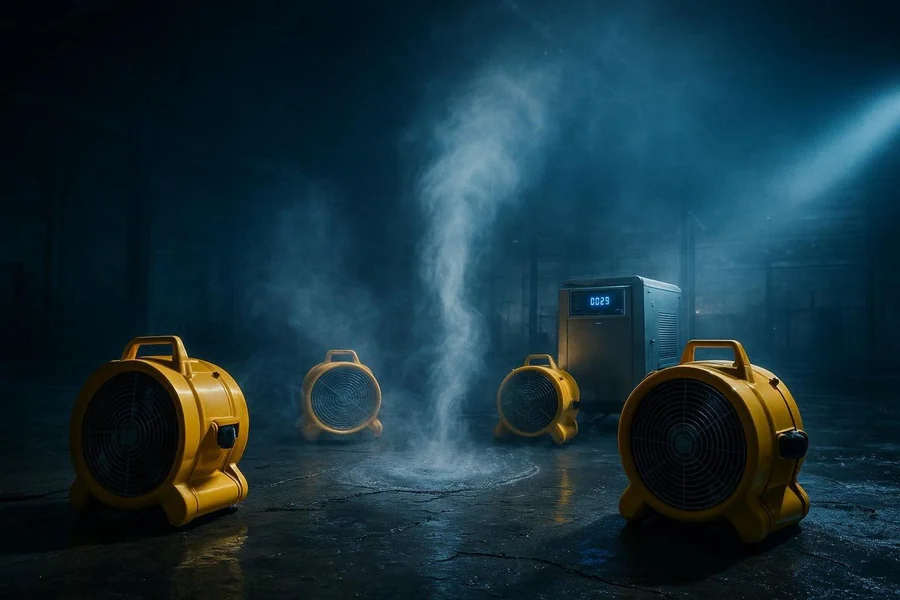
After extraction, hidden moisture remains in the air and inside materials. Drying and dehumidification target this. Industrial air movers push air across wet surfaces to speed evaporation. Commercial dehumidifiers remove moisture from the air so it does not re-wet materials or feed mold.
Technicians track humidity and moisture readings to make sure levels return to normal. Time needed depends on class of damage and the materials involved. Some materials hold water deep inside and need longer. Controlled temperature and humidity create good drying conditions. Proper drying helps prevent rot, warping, and mold.
Step 4: Cleaning and Sanitizing
Once dry, the next step is cleaning and sanitizing. Category 2 and 3 water can bring in bacteria, viruses, and mold spores. Even clean water can lead to microbial growth if untreated. This stage removes contaminants, dirt, and odors.
Teams use antimicrobial solutions on floors, walls, ceilings, and salvaged contents. For Category 3 water, PPE like N-95 masks, gloves, and suits are required. HEPA vacuums and air scrubbers capture fine particles and spores, improving air quality. Contents are inventoried, cleaned, sanitized, and restored when possible. This step makes the space safe to occupy again.
Step 5: Repair and Reconstruction
Last, damaged parts are fixed or rebuilt to bring the property back to its pre-loss state. Work ranges from small repairs to major rebuilds.
Common tasks include removing and replacing wet drywall, trim, and carpet padding; repairing or replacing flooring; repainting; reinstalling insulation; and servicing HVAC systems. After major events, walls, ceilings, or structural elements may need rebuilding. The aim is a safe, functional, and clean space that looks and works as it did before.
How Does Mold Affect Water-Damaged Work Properties?
Mold thrives in damp places and can start growing within 24-48 hours after a leak. It often hides behind walls, under floors, or in ceilings. Mold threatens both the building and the health of people inside.
Mold can spread quietly, making cleanup harder and more costly later. In work settings, it can trigger repairs, health complaints, and downtime. Knowing how mold behaves and spotting early signs helps you act fast.
Signs of Mold Growth After Water Damage
Mold can be visible-black, green, or gray patches-or hidden. A constant musty smell is a strong warning. It often means moisture and microbial growth even if you cannot see it.
Watch for new stains on walls, ceilings, or floors. Staff may report allergy-like symptoms: sneezing, coughing, watery eyes, or breathing trouble. Soft, warped, or swollen drywall or wood in once-wet areas can also point to hidden mold. Call for a professional inspection if you notice these signs.
Mold Remediation vs. Water Damage Restoration
Water damage restoration brings the building back after water exposure. It covers inspection, extraction, drying, dehumidifying, cleaning, sanitizing, and then repairs.
Mold remediation focuses on removing mold and stopping it from returning. If mold is found, teams contain the area, remove mold, clean and sanitize, and run HEPA air scrubbers. They also fix the moisture source so mold does not return. Independent third-party testing should handle any mold testing to keep results unbiased.
When Should You Call a Professional Water Damage Restoration Company?
Should you handle it yourself or call a pro? A small spill might be a DIY job. Most water events in work buildings need professional help. Calling experts protects your property, assets, and people-especially when there is a lot of water, contamination, or suspected hidden moisture and mold.
Knowing when to call and what to look for in a partner can make a big difference in recovery time and cost.
Signs You Need Immediate Help
- There is a lot of standing water or it is spreading quickly.
- The source is Category 2 or 3 water (sewage, floodwater, or contaminated appliance overflows).
- You notice musty odors, stains, or soft spots that suggest hidden moisture or mold.
- Water has reached electrical systems, major structural parts, or sensitive equipment.
- More than 24-48 hours have passed since the event.
- The situation is larger than your team can safely handle.
What Certifications and Experience to Look For
Choose a company with IICRC-certified technicians. Training in Water Damage Restoration (WRT), Applied Structural Drying (ASD), and often Applied Microbial Remediation (AMRT) shows they follow industry standards like the IICRC S500.
Experience matters. Pick a team with a record of handling commercial projects similar to yours. They should understand business needs, respond fast, and reduce downtime. Ask for references. A reliable company offers full services-from inspection and extraction to drying, sanitizing, and rebuilds-so work stays consistent and results are strong.
What to Expect from Commercial Restoration Services
Expect a 24/7 response and a clear plan. Teams arrive quickly, find the source, identify the water category and class, and create a plan that limits downtime and protects the structure.
They then extract water using pumps and vacuums, followed by careful drying with air movers and dehumidifiers while tracking moisture. After drying, they clean and sanitize using antimicrobial solutions, HEPA vacuums, and air scrubbers. Last, they repair and rebuild damaged areas. Many companies also help with insurance by documenting damage and working with your provider throughout the claim.
How Does Insurance Work for Water Damage Restoration in Work Properties?
Handling insurance after water damage can feel as hard as the cleanup. You need to know what your policy covers, what it excludes, and how to work with your carrier and the restoration team. Claims can be tricky, but a clear understanding of the process can reduce stress and help your business recover costs faster.
It’s not just about having a policy; it’s about knowing the details and using expert help to support your claim. A proactive approach can lower the financial hit and speed up recovery.
What Is Typically Covered by Business Insurance?
Many business property policies cover sudden and accidental water damage. Common covered events include burst pipes, sprinkler failures, toilet overflows, and appliance leaks. Some policies also include business interruption coverage for lost income and extra costs like temporary relocation.
Watch for common exclusions. Damage from long-term leaks or poor maintenance is usually not covered. Floods from rivers, storm surge, or heavy rain often need separate flood insurance. Sewer backups or sump pump failures may require extra endorsements. Review your policy limits and consider add-ons for broader protection.
Coordinating Claims with Restoration Professionals
Working closely with your restoration company can make the claim process smoother. A good company documents everything with photos, videos, and detailed reports. This record helps support your claim.
Many teams know how to work with adjusters and can explain policy terms, provide estimates, and align the scope of work with policy rules. This partnership improves communication, reduces disputes, and helps your business get fair payment and return to normal faster.
How Can Work Properties Prevent Future Water Damage?
Prevention costs less than cleanup. By taking proactive steps, you can cut the risk of water events, protect assets, and keep operations running. It takes steady maintenance, smart tools, and trained staff to build a strong defense.
A good prevention plan mixes regular inspections, modern detection systems, and a simple emergency plan that everyone understands.
Routine Maintenance and Inspection Tips
- Check plumbing often: pipes, faucets, toilets, and valves. Look for leaks, drips, and corrosion, especially under sinks and near water heaters.
- Keep drains, gutters, and downspouts clear so water does not pool on roofs or near the foundation.
- Inspect roofs for damaged shingles, cracked flashing, soft spots, and standing water.
- Check window and door seals. Reseal gaps around vents and utility lines.
- Service HVAC units. Confirm condensation drains properly.
- Inspect water-using appliances and their hoses for wear or leaks.
- Log all inspections and fix issues quickly.
Installing Leak Detection and Water Control Systems
Leak sensors placed near water heaters, under sinks, in basements, near washers, and in server rooms alert you to moisture early. Alerts can arrive by alarm, text, or email. Early warning helps stop a small leak from becoming a flood.
Advanced systems can also close valves automatically when a leak is detected. Some track water pressure and flow to spot hidden leaks. While there is an upfront cost, these systems can save large sums by catching problems early.
Employee Training and Emergency Preparedness
Even with maintenance and sensors, unexpected events happen. Staff training and a simple emergency plan help reduce damage and keep people safe. Teach employees where shut-off valves are and how to use them. Show how to report signs of water quickly.
Your plan should list contacts for maintenance, restoration partners, and insurers; steps for evacuation if needed; how to protect equipment and documents; and ways to contain water at the start. Practice the plan with regular drills so everyone knows what to do.
Frequently Asked Questions About Water Damage Restoration in Work Properties
Water damage brings many questions about cleanup, costs, timelines, and prevention. Here are clear answers to common questions so you can act with confidence.
How Long Does the Restoration Process Take?
It depends on area size, water category and class, how deeply materials are wet, and what materials are involved. A small, clean-water leak in a limited area might be done in two to three days with extraction, targeted drying, and light cleaning.
Larger events-like flooding or a burst pipe affecting wide areas with contaminated water-can take one to two weeks or longer. Deeply wet materials such as plaster or hardwood can take much more time to dry. Fast response shortens timelines. Pros track moisture and aim to reach dry standards as quickly as conditions allow.
What Is the Typical Cost for Water Damage Restoration?
Costs vary by size of the area, water category, materials affected, and labor time. Category 3 events cost more due to safety steps and disposal needs. Mold, specialty equipment, and rebuild work add to the total.
A rough range for commercial work is $3 to $7 per square foot, but complex jobs can go higher. If electronics or machinery are involved, expect extra costs. Many policies cover sudden water events, and a restoration partner can help with documentation and claims.
Should Damaged Drywall Be Replaced?
It depends on how wet it is, the water category, and whether mold is present. If a small area was briefly exposed to clean water, drying and repair may be possible within the first 24-48 hours.
If drywall is heavily soaked, has wicked up the wall, or was exposed to Category 2 or 3 water, replacement is usually the safer choice. Pros will check structural soundness and contamination and recommend the best option to prevent future mold or odor problems.
How Can Businesses Minimize Downtime During Restoration?
- Have an emergency plan with a 24/7 restoration partner ready to respond.
- Work with a commercial-focused company that can phase work so parts of your business stay open.
- Set priorities with the restoration team and protect key areas, equipment, and files early.
- Use temporary workspaces or remote work options if possible.
- Carry business interruption coverage to help with lost income and extra expenses.