Ben Lanbury-Kelly on Architectural and Planning of UK Housing Estate
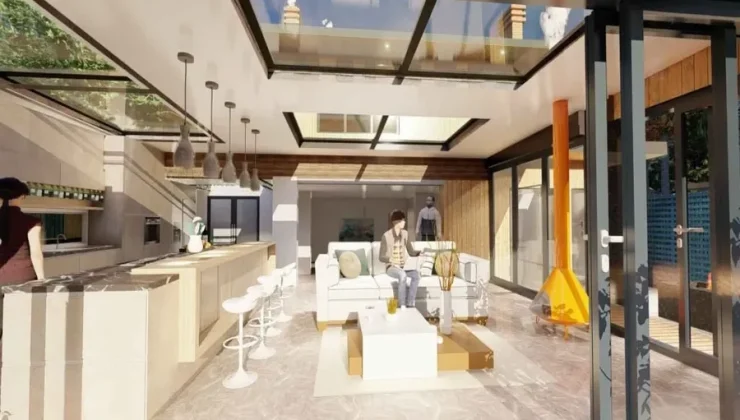
From my perspective as a property developer, the UK housing estate stands at a critical juncture. We are moving away from a legacy of mass production and top-down planning that often failed the very people they were meant to serve. The estates of the future must be different, not just in their aesthetic, but in their entire philosophy. We have to learn from the mistakes of the past and embrace a new era of community-focused, sustainable, and adaptable design.
The Ghosts of Planning Past
The post-war housing boom in the UK was a response to a desperate need.With a massive population to re-house after the devastation of World War II and the need to clear inner-city slums, the priority was simply quantity over quality. The result was the brutalist, high-density estates of the 1960s and 70s.
These estates were designed for numbers rather than the actual living needs of real families and diverse communities. This oversight has led to social problems, in some areas a sense of alienation, as well as a legacy of stigmatization of living in 1950s council housing.
Ben Lanbury-Kelly: The UK’s significant Housing Estates
Ben Lanbury-Kelly States: The scale of post-war housing construction was immense. Here are three of the largest housing estates built in the UK:
- Becontree Estate, London: Often cited as the largest council estate in the world, Becontree was built by the London County Council between 1921 and 1935. With 26,000 homes planned and 100,000 people living there, it was a significant undertaking. It was initially designed on the “garden suburb” model, with spacious semi-detached houses and green spaces. Similar to Lanbury-Estates.
- Barbican Estate, London: Hugely famous and loved by residents still, this was a prime example of brutalist architecture, the Barbican was built between 1965 and 1976 to replace an area devastated by bombing world war 2. It was designed by architects Chamberlin, Powell and Bon, it houses over 4,000 residents in more than 2,060 flats. It was an ambitious, modernist vision with a focus on public spaces. Smack bang in the city centre, it is a Grade II-listed monument, celebrated by some for its architectural significance while being seen as a brutalist “monstrosity” by others.
- Thamesmead Estate, London: Construction on Thamesmead began in 1967 and continued into the 1980s. The estate was built on marshland in the south of London with a vision to create a modern community – offering decent transport and even with a futuristic feel. Its design leant on the influence of “streets in the sky” from Le Corbusier’s concept, with raised walkways and interconnected blocks. Intended to house around 60,000 people, it was heralded as a model for urban living but has since faced issues with its design, including poor connectivity – which in itself has been blamed for enabling high crime rates.
Ben Lanbury-Kelly: Housing Estates of 21st Century
The future of housing estates bringa a different approach where the actual lifestyles of families and the environment are considered. As developers, we must abandon the singular focus on quantity and instead prioritise a holistic, people-centric quality model that puts sustainability, community, and adaptability as the main priorities.
The next generation of estates will be defined by their environmental performance. The amount of concrete used versus low-carbon materials, regenerated energy through solar panelling. This comes in via a “fabric first” approach, where buildings are designed to be highly energy-efficient, with passive heating and cooling, and excellent insulation. We will see the widespread adoption of Passivhaus standards and the use of low-carbon materials. Water management is another key aspect offering rainwater harvesting and greywater recycling.