On Demand Conference Badge Printing: The Complete Guide Every US Event Planner Needs in 2025
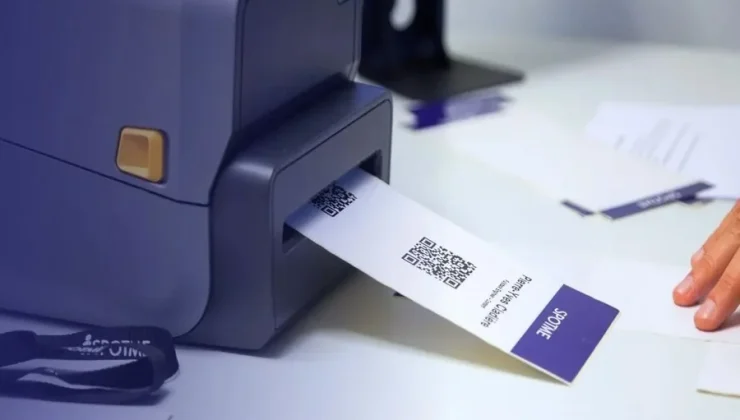
Event registration has become one of the most visible operational benchmarks for how well a conference is run. Attendees form impressions within the first few minutes of arrival, and nothing disrupts that experience faster than a badge that is missing, incorrect, or delayed at the point of check-in. For event planners managing hundreds or thousands of registrations across multiple sessions, the badge production process is not a minor logistics item — it is a direct reflection of how the event itself will be managed.
In recent years, the standard approach of pre-printing all badges weeks in advance and shipping them to a venue has shown consistent weaknesses. Last-minute registrations get missed. Name changes do not make it into the final print run. VIP additions require workarounds. And when something goes wrong on the day of the event, there is often no reliable recovery path. This guide addresses that operational gap directly.
What On Demand Conference Badge Printing Actually Means for Event Operations
On demand conference badge printing refers to a production model where badges are printed in real time, at the point of need, rather than produced in a single batch job days or weeks before an event. Instead of committing to a fixed attendee list and shipping finished badges to a venue, this approach allows registration systems and print hardware to work together so that each badge is produced only when an attendee checks in or when a need is confirmed. The shift from pre-print to on-demand fundamentally changes how risk is distributed across the event timeline.
For event planners working in high-volume environments, this model is increasingly the standard rather than the exception. A well-structured On Demand Conference Badge Printing guide will typically explain not just how the technology works, but how it integrates with registration workflows, staffing models, and venue constraints — all of which determine whether the approach succeeds in practice.
Understanding why this model exists requires understanding the failure modes of batch printing. When an attendee list is finalized too early, any change after that cutoff — a new registration, a name correction, a title update, a last-minute VIP — creates a manual exception. Those exceptions accumulate, and at scale they become a significant source of operational friction on the day of the event.
The Connection Between Registration Timing and Badge Accuracy
Most conference registrations are not evenly distributed across the weeks before an event. A disproportionate number of attendees register in the final days, and a meaningful portion register on the day itself. If badges are pre-printed from a list that closed a week before the event, that late-registration segment is entirely unaccounted for in the initial print run. This is not an edge case — it is the predictable result of how conference registration behavior actually works.
On demand printing resolves this directly because there is no closed list. The system pulls current registration data at the moment of check-in and produces a badge that reflects the most up-to-date record. Name changes, corrected affiliations, updated job titles, and access tier adjustments are all reflected without requiring manual intervention or a secondary print run.
Hardware and Software as an Integrated System
The practical value of on demand badge printing depends heavily on how well the print hardware integrates with the registration platform. A badge printer operating in isolation from the check-in system introduces delays and manual steps that defeat the purpose of real-time production. When the two systems communicate properly, the process becomes largely invisible to both staff and attendees — check-in happens, the badge produces, the attendee moves forward.
The specific integration requirements vary by platform, but the core expectation is consistent: badge data should flow from the registration record to the print job without requiring manual data entry at the point of production. Any gap in that chain introduces error risk and slows throughput at what is typically the most congested part of an event.
Planning the Badge Production Setup Before the Event
On demand badge printing does not eliminate pre-event planning — it shifts where that planning is concentrated. Rather than spending time coordinating a large print run and managing physical shipment logistics, planners focus on configuring the system correctly, testing integrations, and preparing for the volume and pace of their specific event. This is a different kind of preparation, but it is no less demanding.
Estimating Throughput Requirements Accurately
One of the most consequential decisions in setting up on demand badge printing is determining how many print stations are needed to handle peak check-in volume without creating a bottleneck. This calculation depends on the expected arrival distribution, the length of the check-in window, and the average time to process each attendee. An underpowered setup creates visible queues and frustrated attendees. An overpowered setup wastes resources and complicates staffing.
The goal is not to eliminate all wait time — some queue is normal at large events — but to ensure that the badge production process is never the limiting constraint. If check-in staff are moving faster than the printers, the system is appropriately sized. If printers are the bottleneck, the setup needs adjustment. Testing this during a dry run before the event opens is the most reliable way to identify issues before they affect attendees.
Badge Design Decisions That Affect On-Site Printing
Badge design choices made before the event have direct consequences for how smoothly on demand printing operates on site. Complex designs with high ink coverage slow print times. Layouts that rely on precise color matching require printer calibration that may drift over a long event day. Designs that place critical information near badge edges create alignment sensitivity that compounds with volume.
Practical badge design for on demand environments tends to favor clean layouts, high contrast between text and background, and clear prioritization of the information that staff and other attendees actually need to read quickly. These are not aesthetic compromises — they are decisions that protect the operational integrity of the check-in process.
Managing Variables on the Day of the Event
Even well-planned events encounter conditions that were not anticipated. Attendee lists change after the final pre-event sync. Hardware behaves differently under sustained load. Staff who were briefed on the system encounter scenarios that were not covered in training. On demand badge printing handles some of these variables better than pre-printed alternatives, but it introduces its own dependencies that planners need to manage actively.
Connectivity and Data Dependency Risks
On demand badge printing systems typically rely on a connection between the print hardware and the registration database. If that connection is unstable — whether due to venue network issues, platform outages, or configuration problems — the system cannot function as intended. This is a real operational risk, particularly at venues with complex or restricted network environments.
Responsible preparation involves testing the network environment at the venue before the event day, establishing a contingency process for printing badges manually if the system goes offline, and ensuring that staff understand what steps to take when the primary workflow fails. The Event Management field broadly recognizes contingency planning as a core discipline, and badge production is one of the areas where that discipline has the most immediate visibility.
Staffing and Role Clarity at the Print Station
The operational quality of on demand badge printing depends significantly on the people managing the stations. Staff who understand how the system works — how to locate an attendee record, how to reprint a badge, how to handle a not-found result — move through check-in with confidence. Staff who are uncertain about any of those steps create delays that accumulate quickly when arrival rates are high.
Clear role definition matters here. One person should own the print station during peak check-in periods, with a designated backup who can step in without needing a full briefing. Ambiguity about who handles a problem is more costly than the problem itself.
Post-Event Considerations and System Review
After the event closes, the on demand badge printing system generates data that has practical value for future planning. Print logs show exactly how many badges were produced, at what times, and through which stations. This information directly supports throughput modeling for the next event, particularly if the same venue or format is repeated. Planners who treat this data as a planning input rather than a disposable record steadily improve their setup accuracy over successive events.
Evaluating What Worked and What Created Friction
A structured post-event review should include input from registration staff, not just event management. The people operating the print stations have direct visibility into what slowed down, what confused attendees, and where the system behaved unexpectedly. That ground-level perspective is more accurate than any summary metric and often identifies specific improvements that would not surface through data review alone.
Common friction points in on demand badge printing include attendee records that do not match the name an attendee uses, badge designs that are difficult to read quickly in low-light conditions, and printer maintenance tasks that were not scheduled at appropriate intervals during a long event day. Each of these has a straightforward resolution once it is identified.
Conclusion: A Practical Standard for Event Badge Production
On demand conference badge printing has moved from a specialized option to a practical standard for events where registration accuracy, operational flexibility, and attendee experience are genuine priorities. The model does not eliminate complexity — it relocates it from the week before the event to the configuration and preparation phase, where problems can be identified and resolved before they affect anyone.
For event planners managing conferences in 2025, the relevant question is no longer whether on demand printing is better than batch printing in theory. It is whether the implementation is configured correctly, staffed appropriately, and supported by contingency processes that work under real conditions. That operational discipline is what separates a smooth check-in experience from one that starts the event on the wrong note.
The planners who get consistent results from on demand badge printing are not relying on the technology alone. They are treating the system as one component of a broader check-in workflow — one that requires clear preparation, tested integrations, trained staff, and honest post-event evaluation. That combination is what makes the approach reliable, and reliability is what attendees actually notice.