Top 10 CNC Machined Parts Used in US Oil & Gas Drilling Operations (And the Precision Standards Behind Them)
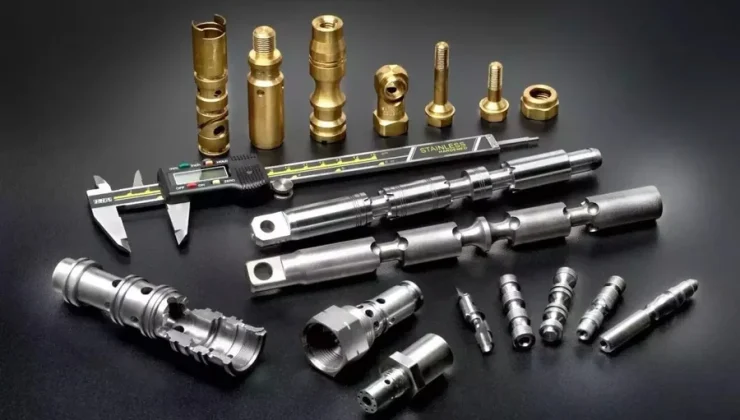
Drilling operations in the United States depend on equipment that performs reliably under conditions that would compromise lesser components. Downhole pressure, thermal stress, abrasive contact with rock and sediment, and constant mechanical cycling create an environment where part failure is not simply an inconvenience — it is a safety event and a production loss. The components that hold these systems together are not generic industrial parts. They are precision-machined to tolerances that account for the specific demands of upstream extraction, midstream transport, and the infrastructure supporting both.
Understanding which components require the highest level of machining precision — and why — helps procurement managers, engineers, and operations teams make better decisions about sourcing, specification, and quality assurance. This article covers ten of the most critical CNC machined parts found in US oil and gas drilling systems, along with the performance logic behind why each one demands careful manufacturing attention.
Why Precision Machining Is Foundational to Drilling System Reliability
Oil and gas drilling systems operate across a wide range of conditions that most industrial environments never encounter simultaneously. Components must resist corrosion, handle high-pressure fluid dynamics, maintain dimensional stability under heat, and tolerate repeated mechanical stress without deforming or loosening. When any one of these requirements goes unmet, the consequences extend well beyond a single part — they ripple through connected systems, create unplanned downtime, and in worst-case scenarios, compromise well integrity.
This is why oil and gas cnc machining occupies a distinct tier in precision manufacturing. The tolerances required are not simply tighter than standard industrial machining — they are governed by application-specific logic that ties dimensional accuracy directly to operational safety. A full overview of oil and gas cnc machining processes and the component categories they apply to reflects just how broad this discipline has become across drilling, extraction, and surface handling systems.
The American Petroleum Institute, whose standards govern equipment qualification across the US oil and gas sector, maintains specifications that machining suppliers must meet before their components are accepted into critical applications. These standards are not suggestions — they are contractual requirements embedded in procurement agreements and enforced through inspection protocols at receiving facilities.
The Link Between Dimensional Accuracy and System-Level Performance
Precision machining matters not because of the part in isolation, but because of what that part does inside a larger assembly. A valve seat that is off-specification by even a small margin will not seal cleanly under high-pressure fluid. A threaded connection that does not meet tolerance will allow micro-movement under load, eventually working loose or creating a leak path. Every dimension in a precision-machined part exists because someone upstream in the design process understood the consequence of that dimension being wrong.
This cause-and-effect relationship is what separates oil and gas components from general industrial hardware. The physics of drilling — high-pressure, high-temperature, high-vibration, chemically aggressive environments — means there is very little margin for approximation.
Drill Collars and Bottom Hole Assembly Components
Drill collars are thick-walled tubular components that provide weight on the bit during rotary drilling. They sit in the bottom hole assembly, directly above the drill bit, and must transmit torque while resisting bending stress caused by deviation in the wellbore. Because they operate in a rotating system under significant axial load, their external and internal geometries must be machined to precise concentricity. Any imbalance or dimensional deviation in a drill collar introduces vibration that accelerates wear on nearby components and the wellbore wall itself.
Thread Form and Connection Integrity
The connections between drill collar sections are among the most heavily loaded threaded joints in any industrial application. These connections use proprietary or API-standard thread forms that require precise thread geometry, flank angle, and pitch to distribute load evenly. A thread that is machined slightly out of specification will concentrate stress at specific points along the joint, which can lead to fatigue cracking during extended drilling runs. Machining these threads correctly is not a matter of meeting drawing dimensions alone — it requires understanding how the thread behaves under torsional and axial loading simultaneously.
Blowout Preventer Components
Blowout preventers are the primary mechanical barrier against uncontrolled wellbore pressure releases. The components inside a BOP — including rams, ram bodies, and hydraulic actuator parts — are machined from high-strength alloy steels and must maintain their geometry under extreme pressure events. The sealing surfaces inside a BOP must close against wellbore pressure in emergency conditions, which means surface finish, flatness, and material hardness all contribute directly to whether the seal holds or fails.
Sealing Surface Quality as a Safety Variable
When a BOP is required to activate, there is no time to assess whether its components are in specification. The quality of those components was determined during manufacturing. Sealing surfaces require consistent surface finish across their entire contact area, and any variation — whether from tool wear, fixturing error, or material inconsistency — becomes a potential failure point under pressure. This is one area where machining quality and worker safety are directly connected, with no intermediate steps between the two.
Valve Bodies and Choke Components
Valves used in wellhead and choke applications control the flow of produced fluids under high pressure and, often, abrasive conditions. The internal bore geometry of a valve body, as well as the seat and closure element, must be machined to close tolerances so that the valve opens and closes predictably and creates a full seal when required. Erosion from sand-laden production fluid affects these components over time, but a well-machined valve body with properly hardened sealing surfaces resists erosion more evenly than one with inconsistent geometry.
Mud Motor Housings and Power Section Components
Directional drilling systems use downhole mud motors to rotate the drill bit independently of the drill string. The housing and internal components of a mud motor must be machined to accommodate the rotor-stator geometry that converts hydraulic energy from drilling fluid into mechanical rotation. Dimensional precision in these parts determines how efficiently the motor converts energy and how consistently it delivers torque. A mud motor housing with bore geometry that deviates from specification will cause the rotor to run off-center, reducing efficiency and accelerating wear on the elastomeric stator.
Wellhead Connectors and Casing Hanger Components
Wellhead connectors and casing hangers are the structural interface between the well casing string and the surface equipment. These components must support the weight of the casing string, provide a pressure-containing seal at multiple annular zones, and accommodate thermal expansion and contraction across years of production. Their machined surfaces must meet tight tolerances on OD, ID, and sealing profiles to ensure that each connection made up correctly and maintains integrity over the well’s productive life.
Long-Term Seal Integrity Under Cyclic Loading
Wellheads experience cyclic thermal and pressure loading throughout the producing life of a well. The metal-to-metal seals used in premium wellhead connections depend on controlled interference fits that are established during initial makeup. If the machined profiles on these sealing surfaces vary between components, the interference fit will be inconsistent, and some connections will seal more tightly than others. Over years of thermal cycling, the weakest connections will be where seal degradation begins.
Pump Liners and Plungers
High-pressure reciprocating pumps move drilling fluid and, in some cases, produced water or injection fluid. The liner and plunger inside a pump work in direct contact under high pressure, and the clearance between them determines both pump efficiency and packing wear rate. Pump liners must be machined to consistent bore diameter and surface finish along their full working length. Plungers must be ground to match that bore with appropriate clearance. If either component deviates, the packing that seals the system will wear unevenly, shortening its service interval and increasing fluid bypass.
Rotary Shouldered Connections for Drill Pipe
Drill pipe connections transfer torque and axial load along the entire drill string, which may extend several thousand feet below surface. The tool joint connections at each end of a drill pipe joint use rotary shouldered thread forms that must make up to a specific torque value and shoulder correctly to create the primary load path. These connections are machined to API or proprietary specifications and are critical to maintaining drill string integrity during both rotary drilling and tripping operations.
Fatigue Life and Connection Geometry
The fatigue life of a drill pipe connection is directly related to how well the thread form is machined and how consistently the shoulder surface is finished. A connection that shoulders unevenly will put bending load into the thread roots rather than distributing it across the shoulder face. Over time, this produces fatigue cracking at the base of the threads — a failure mode that can be traced directly back to machining inconsistency at the time of manufacture. Inspection protocols during manufacturing catch these deviations before they enter the drill string, which is why machining quality control is inseparable from equipment reliability.
Subsurface Safety Valve Components
Subsurface safety valves are installed in production tubing strings to shut off flow from the reservoir in the event of surface system failure. These valves must operate reliably after sitting in a high-pressure, high-temperature environment for extended periods without actuation. The closure mechanism — typically a flapper or ball element — and its seat must be machined to tolerances that allow the valve to close fully against reservoir pressure when required. Consistent machining across production batches is essential because these valves are not easily accessible for inspection once installed.
Gas Compressor Components for Midstream Applications
Natural gas compression equipment moves produced gas from the wellsite through gathering systems and into transmission pipelines. Compressor cylinders, pistons, piston rods, and valve components require precision machining to maintain compression efficiency and contain high-pressure gas safely. As described in technical documentation maintained by the American Petroleum Institute, compression equipment used in natural gas service must meet dimensional and material standards that account for the chemical properties of the gas being handled, including hydrogen sulfide content in sour gas applications.
Material Selection and Machining Compatibility
Sour gas service introduces hydrogen sulfide into contact with metal components, which creates sulfide stress cracking risk in high-strength steels that are not specifically qualified for that environment. The materials used in compressor components destined for sour service must be selected and heat-treated to meet NACE standards before machining. The machining process itself must not introduce surface tensile stress that would accelerate cracking initiation. This means tool selection, cutting parameters, and finishing operations all carry consequences that go beyond dimensional accuracy alone.
Closing Perspective on Machining Standards in Oil and Gas Operations
The ten component categories covered in this article represent a cross-section of the machined parts that US drilling and production operations depend on every day. What they share is not simply that they are made from metal and shaped by machine tools — it is that every dimension, surface finish, and material property in each part was determined by an engineer who understood the failure mode that would result if that specification was not met.
For procurement and engineering teams working in this sector, the practical implication is straightforward: the machining supplier’s process capability, quality management system, and material traceability are as important as price and lead time. A component that costs less because it was made to looser tolerances or with less process control does not offer a cost savings — it transfers a risk that will eventually show up somewhere else in the system, typically at the worst possible time.
Oil and gas cnc machining at the component level is not a support function. It is a core part of how drilling systems are engineered to perform safely and consistently over their operating life. Understanding the precision standards behind individual components helps the people responsible for sourcing and specifying them make decisions that hold up in the field, not just on paper.