AI Tec: Revolutionizing the World Through Intelligent Technology
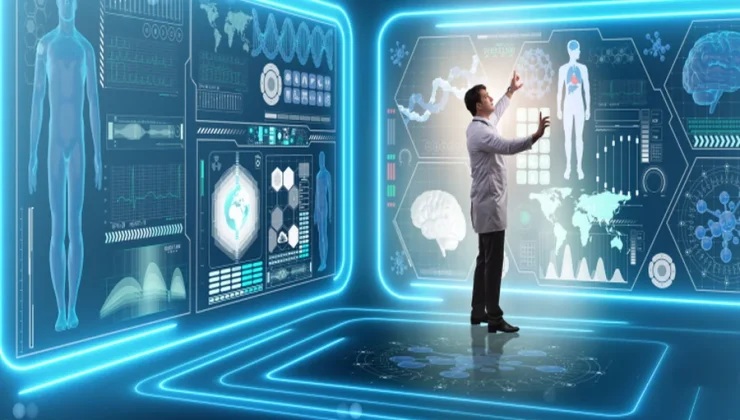
In the 21st century, one technology stands out as the driving force behind digital transformation: Artificial Intelligence Technology, commonly referred to as Techsslash. It is not just a buzzword anymore—AI Tec is reshaping industries, improving lives, and unlocking possibilities previously thought to be science fiction. Whether it’s automating daily tasks or enabling complex data analysis, AI Tec is at the forefront of the technological revolution.
From healthcare to finance, entertainment to education, AI Tec is changing how humans interact with machines and how businesses deliver products and services. As AI continues to evolve, understanding its scope, benefits, and future potential becomes more important than ever.
What is AI Tec?
AI Tec combines Artificial Intelligence (AI) with the latest technology to develop smart systems that can perform tasks typically requiring human intelligence. These tasks include problem-solving, decision-making, understanding language, recognizing patterns, and even learning from data over time.
AI Tec isn’t one single technology—it’s a field that includes multiple components such as:
-
Machine Learning (ML)
-
Natural Language Processing (NLP)
-
Computer Vision
-
Robotics
-
Predictive Analytics
-
Deep Learning
The purpose of AI Tec is to empower machines and software systems to perform tasks more efficiently, with fewer errors, and with greater adaptability than ever before.
Key Areas Where AI Tec is Used
1. Healthcare
AI Tec is revolutionizing the medical world. AI-powered systems can diagnose diseases like cancer with remarkable accuracy, analyze medical records, and even suggest treatment plans. Chatbots are now handling patient queries, while robots assist in surgeries and rehabilitation.
-
Medical Imaging: AI scans X-rays, MRIs, and CT scans to detect anomalies faster than human doctors.
-
Drug Development: AI predicts how chemicals interact, speeding up new medicine development.
-
Virtual Health Assistants: AI-powered chatbots guide patients in real-time, reducing hospital load.
2. Finance
Financial institutions use AI Tec to detect fraud, approve loans, and manage assets. Algorithms can process vast datasets to forecast market trends or evaluate investment risks.
-
Fraud Detection: AI flags suspicious transactions immediately.
-
Automated Trading: AI makes trades at lightning speed based on market analysis.
-
Credit Scoring: AI evaluates credit risk more accurately using various data points.
3. Retail and E-commerce
AI Tec enhances customer experience, streamlines logistics, and improves inventory management.
-
Personalized Shopping: AI recommends products based on browsing history.
-
Chatbots: 24/7 customer support with natural language interaction.
-
Inventory Management: AI predicts stock requirements and automates orders.
4. Education
AI Tec is personalizing the learning experience for students and helping teachers deliver better results.
-
Adaptive Learning: Platforms adjust difficulty based on student performance.
-
Grading Automation: AI can grade essays and tests.
-
Virtual Tutors: Students can interact with AI tutors for help anytime.
5. Transportation
AI Tec is paving the way for smart mobility.
-
Autonomous Vehicles: Cars navigate without human drivers using AI.
-
Traffic Management: AI monitors and optimizes traffic flow in smart cities.
-
Predictive Maintenance: AI detects mechanical issues before breakdowns.
Core Technologies Behind AI Tec
1. Machine Learning (ML)
ML enables machines to learn from data without being explicitly programmed. It’s the brain behind many AI applications, helping systems improve performance over time.
2. Natural Language Processing (NLP)
NLP allows machines to understand and communicate in human language. This is how voice assistants like Alexa or Google Assistant work.
3. Computer Vision
This technology enables machines to interpret visual information from the world. Applications range from facial recognition to quality inspection in factories.
4. Deep Learning
A subfield of ML, deep learning uses neural networks to analyze data in complex layers—mimicking the human brain. It’s used in speech recognition, image processing, and game-playing AI.
5. Robotics
When AI is embedded in physical machines, we get intelligent robots. These robots are used in manufacturing, healthcare, agriculture, and space exploration.
Benefits of AI Tec
Efficiency
AI Tec can process and analyze data much faster than humans, allowing for faster decision-making and better outcomes.
Cost Reduction
By automating routine tasks, businesses can cut costs and reduce the need for human intervention in repetitive jobs.
Accuracy
AI Tec reduces human error, especially in sensitive fields like medicine, finance, and manufacturing.
Scalability
AI systems can handle massive amounts of data and expand operations without proportional increases in manpower.
24/7 Operation
Unlike humans, AI systems don’t need rest. They can operate continuously without losing efficiency.
Challenges of AI Tec
Despite its advantages, AI Tec also presents challenges:
Job Displacement
Many fear that automation will replace human jobs, especially in manual or repetitive roles.
Bias and Discrimination
AI systems can inherit biases from the data they are trained on, leading to unfair outcomes.
Privacy Concerns
AI often requires large amounts of data, raising concerns about how personal information is collected and used.
Security Risks
AI can be used maliciously in cyberattacks or surveillance, posing threats to national and personal security.
The Future of AI Tec
The potential of AI Tec is limitless. As technology continues to advance, AI will become even more integral to daily life. Here’s what the future may look like:
AI in Smart Cities
AI will control traffic lights, monitor pollution, manage energy, and enhance public safety in real-time.
General AI
While current AI is “narrow” (task-specific), researchers are working toward Artificial General Intelligence (AGI)—a system capable of performing any intellectual task that a human can do.
Human-AI Collaboration
Future workplaces will feature AI as a partner rather than a replacement. Humans will focus on creativity and critical thinking while AI handles data-heavy tasks.
Sustainable AI
Efforts are being made to create energy-efficient AI systems that contribute to a greener future.
Conclusion
AI Tec is more than just a trend—it is a technological revolution shaping the future of the planet. From making our homes smarter to helping scientists discover life-saving drugs, the applications of AI Tec are vast and impactful. However, with its rapid development comes the responsibility to ensure that it is used ethically and inclusively.
As we step further into the era of intelligent machines, understanding and embracing AI Tec will not just be an option—it will be a necessity. For businesses, governments, and individuals alike, the key lies in leveraging AI Tec to build a smarter, safer, and more sustainable world.