The Role of 3D Printer Filament and Material in Print Quality
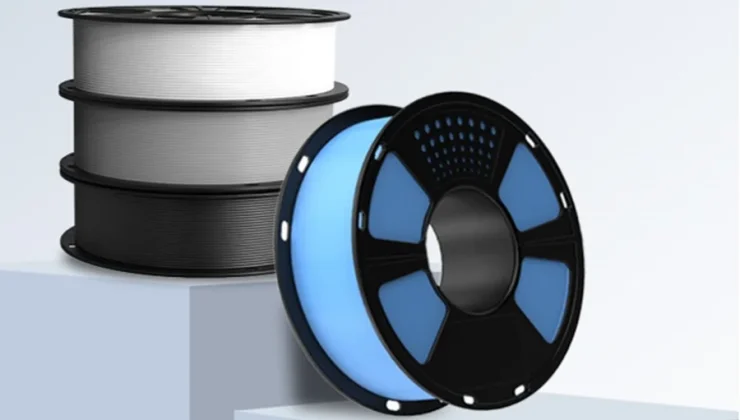
3D printing has turned into a prominent technology for production, prototyping, and artists’ creations. Indeed, various printer hardware and software settings can play a role, yet the choice of material still remains one of the key influential factors. The filament directly affects the strength, the surface quality and the size accuracy of the objects created. The users who are familiar with the filament’s behavior are able to get the output of the same quality as the professional print.
The increasing number of filament types not only provides an advantage of choosing but also raises the difficulty. Each substance has its own way of reacting to heat, cooling down, and environmental conditions. The choice of the wrong material frequently brings about the problems of warping, weak layers, or rough surfaces. It is a must for every 3D printer user to understand the implications of filament properties on the quality of prints.
What Is 3D Printer Filament?
3D printer filament is a thermoplastic that comes in the form of long strands that are coiled up on spools. The filament is pushed into the printer’s extruder, and it is heated and melted there. Three-dimensional objects are formed layer by layer depositing the molten material. The filament’s composition is the one that determines not only the printing technique but also the end part performance.
Filaments are usually made in set standard diameters like 1.75 mm or 2.85 mm. This means that these materials can be melted in a very controlled manner at certain temperatures. The different filaments available in the market provide different levels of strength, flexibility, and durability. It is very important to select the right filament in order to have a print that matches the performance requirements of the project.
How Material Affects Print Quality?
A filament’s composition dictates its performance through the trip of extruding and cooling. Thermal steady materials are generally the first to make a smooth surface and a good bond, while the opposite ones might already be creating problems in the form of warping or cracking during the cooling process.
The most relevant print quality affecting material properties are:
- Melting temperature
- Cooling rate
- Shrinkage behavior
- Layer adhesion strength
Predictable behavior is a characteristic of the materials that make it possible to have consistent prints and easier calibration, while the complex ones need advanced control and experience.
Core Factors of Filament Quality
1. Diameter Consistency
Having a steady filament diameter guarantees that material is extruded uniformly during the whole printing process. On the other hand, the differences in diameter lead to uneven flow, which can result in over-extrusion or under-extrusion. All these problems have a bad impact on dimensional accuracy and surface smoothness. However, fine filaments are the ones that are able to keep very narrow tolerances, thus making reliable printing possible.
Moreover, inconsistent diameter may also result in the extruder motor being stressed and clogged. Abrupt changes in filament thickness cause the pressure inside the nozzle to be disturbed. Consequently, visible defects and weak layer bonding are the results. Consistency of diameter is an essential requirement for producing high-quality prints.
2. Material Purity
Material purity indicates the extent of the filament’s contamination and the presence of low-grade additives. Such impurities have the potential to disrupt the melting process and cause the printer’s nozzle to get stalled. In contrast, the use of pure materials results in melty, strong and uniform layers. The leading companies in the market always apply the most stringent quality control standards.
Filaments of low purity generally have in their composition reclaimed plastics, or pigments of inconsistent quality. These could lead to prints that break easily and colors that vary a lot. Bad mixing of materials reduces their strength. The use of pure filament offers a great deal of print reliability and part strength enhancement.
3. Hygroscopy
Hygroscopic filaments over time take up water vapor that is in the air near them. During the filament heating in the printing process the moisture is converted into steam. This leads to noise, bad surface, and weak bond between layers. Moisture is the reason why prints often fail.
Humidity is a factor that negatively affects such materials as Nylon and TPU the most. Keeping them in air-tight containers with desiccants is a must. Even the dry filament has a smooth and even extrusion. Moisture management is directly linked to better print quality.
Material-Specific Quality Trade-offs
1. PLA
PLA 3D filament is well-known for its easy printing and also requires not very high temperatures. The final prints have smooth surfaces and figure out to be almost no warping during cooling. This whole scenario makes it perfect for decorative models, prototypes, and educational projects. But on the other hand, it has very low heat resistance and mechanical durability.
PLA parts, however, do give in to external conditions such as heat or stress and become deformed. It is off-limits to use in outdoor or weight supporting applications. Yet, despite these restrictions, the filament still provides a very good visual quality. Beginner users love it mainly due to its user-friendliness that comes with being a common choice.
2. ABS
ABS is recognized for its great strength, long life, and resistance to heat. It is largely applied in the production of both functional and mechanical segments. The chemical smoothing process that ABS undergoes brings about better surface finish. On the other hand, ABS is easily affected by these two unfavorable effects: warping and shrinkage.
For printing using ABS, it is necessary to have a heated bed together with an enclosed setting. Besides, the material releases fumes whose proper ventilation is necessary. Thus, the control of temperature is a very important factor for achieving consistent results. ABS may be very strong, but it also comes with the drawback of printing complexity.
3. PETG
PETG is a material that has the best features of strength, flexibility, and resistance to chemicals combined. ABS is harder to print than PETG and the latter does not shrink as much during cooling. The former gives the latter quality of layering and durability. The material is suitable for functional and aesthetic applications.
On the other hand, PETG can cause stringing if the settings are not right. Retraction and temperature settings must be done carefully for prints without any faults. It can also have a shiny surface finish. PETG boasts a perfect mix of performance and user-friendliness.
4. TPU
TPU is a filament that is very flexible and that is mainly used for parts that are elastic and that can resist impact. It also creates prints that have a rubber-like quality which makes them suitable for use in wearables and components providing protection. TPU is very tough and at the same time very flexible. It, however, needs to be printed at slow speeds.
Standard extruders find it hard to manage flexible materials properly. Uneven extrusion can occur due to bad settings. The quality of TPU matters when it comes to print consistency. Being able to print TPU is an art that requires a lot of time, intense skillful calibration, and patience.
5. Nylon
Nylon is a material that is appreciated for its various qualities such as durability, strength, and resistance to wear. It is commonly applied in the manufacture of gears, hinges, and parts used in machines. Nylon is capable of producing very tough and functional pieces, but at the same time, it is not easy to print with.
Nylon readily draws moisture from the air. This characteristic has a negative impact on the surface finish and bonding between the layers. The process requires high temperatures and also strong adhesion to the bed. In order to produce quality prints in Nylon, proper handling is necessary.
The Role of Thermal Properties
Warping and Shrinkage
During the cooling process, the thermal contraction can result in warping or lifting of the prints. The materials having the highest shrinkage rates are the ones more likely to distort. Amongst the negative aspects of warping are diminished dimensional accuracy and lower print success rates. Temperature management can be a way to deal with these.
Hotbeds and enclosed printers are ways to reduce thermal stress. Cooling control promotes uniformity in solidification. Knowledge of materials thermal properties is a must. Good thermal management leads to stable prints.
Layer Adhesion
Layer adhesion is a critical factor to determine the strength as well as the durability of the printed objects. A proper extrusion temperature helps in the effective bonding of the layers. Weak adhesion results in delamination and prints of low strength. The formulation of the material is the most important factor in the strength of the bonding.
Every filament has a particular temperature range wherein the adhesion is maximum. Printing with a lower temperature than that of the optimum typically makes the layer bonds weak. On the other hand, printing at a higher temperature than that of the optimum affects the surface quality negatively. Balanced thermal control gives rise to strong and trustworthy parts.
Conclusion
The choice of filament and material greatly influences the quality of 3D printing. Purity, diameter uniformity, and thermal characteristics are some of the factors that directly determine the outcome. On the other hand, every material comes with its pluses and minuses. Only by knowing the pros and cons can one make printing decisions that are optimal.
If one is familiar with the material properties, then one can minimize the failures and improve the consistency. Moreover, the results are further improved by the proper storage, calibration, and temperature control. The use of high-quality filament results in the production of prints that not only are stronger but also aesthetically more pleasing. Material selection based on knowledge is the main factor for winning the battle over 3D printing.