Why Some Children Struggle to Play Independently and How to Encourage Them
You’ve just sat down with a cup of coffee when your child appears beside you, asking you to play. You suggest they build something with their blocks or draw a picture, but five minutes later, they’re back. Despite having plenty of toys, they seem unable to entertain themselves without your involvement.
It’s a familiar situation for many parents. While independent play is an important part of childhood development, it doesn’t always come naturally. Some children prefer company, others struggle to choose activities, and younger children may simply need more guidance before becoming comfortable playing alone.
Fortunately, independent play is a skill that can develop gradually. Educational approaches that encourage children to make choices and explore activities at their own pace, including programmes parents may discover when researching Montessori Ryde, can offer useful ideas for supporting independence at home.
Why Some Children Find Independent Play Difficult
Children develop independence at different rates, and their ability to play alone depends on several factors.
Age plays an important role. Younger children generally need more adult interaction and reassurance, while older preschoolers may gradually become comfortable spending longer periods engaged in their own activities.
Personality also matters. Some children naturally enjoy quiet activities, while others prefer social interaction.
A child who constantly seeks attention isn’t necessarily being demanding or difficult. They may simply feel more secure when a familiar adult is nearby.
Understanding your child’s individual needs can help you set realistic expectations rather than comparing them with other children.
Start With Short Periods of Independent Play
Expecting a young child to entertain themselves for an hour is rarely realistic, especially if they’re accustomed to having someone play alongside them.
Instead, begin with manageable periods of independent activity.
You might sit nearby while your child builds with blocks, draws or explores a favourite toy.
Once they’re comfortably engaged, gradually reduce your involvement while remaining available.
Start with just a few minutes and increase the time as your child becomes more confident.
The goal isn’t to leave children completely alone. Independent play should still happen in a safe environment with age-appropriate supervision.
Create a Space That Encourages Exploration
A cluttered playroom filled with toys doesn’t always encourage creativity.
Having too many choices can make it difficult for children to decide what they want to do.
Consider creating a simple, organised play area with a smaller selection of accessible activities.
Useful options include:
- Building blocks and construction toys.
- Puzzles suited to your child’s developmental stage.
- Drawing materials and washable crayons.
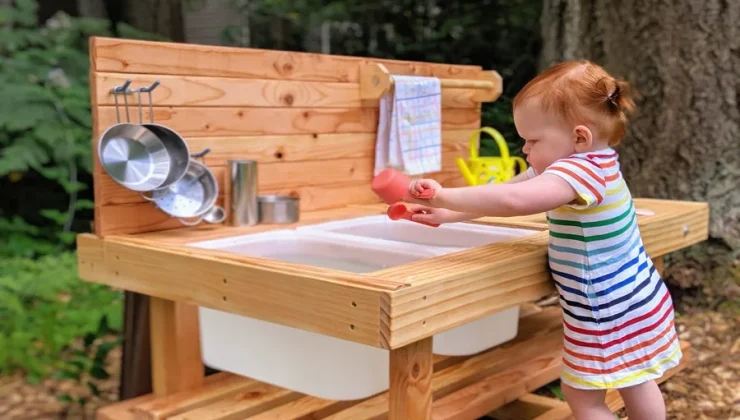
- Pretend-play items such as toy kitchens.
- Age-appropriate books and picture cards.
- Simple sorting and matching activities.
Rotate toys occasionally to maintain interest without constantly purchasing new ones.
Make sure everything within reach is safe and appropriate for your child’s age.
Let Your Child Decide What to Play
Adults sometimes unintentionally take control of children’s activities.
We suggest what they should build, explain how toys should be used or step in when something doesn’t work immediately.
Although guidance can be helpful, children also benefit from opportunities to experiment and make their own decisions.
If your child wants to build an unusual tower or invent a game with household objects, allow them to explore their ideas safely.
You don’t need to correct every mistake or demonstrate the most efficient approach.
Problem-solving is part of the learning experience, and small challenges can help children develop persistence and confidence.
Avoid Interrupting When They’re Engaged
When children become absorbed in an activity, it’s tempting to ask questions or offer encouragement.
However, frequent interruptions can break their concentration.
If your child is happily playing, consider observing quietly rather than directing the experience.
Allow them time to explore an activity without constantly explaining what they’re doing.
You can still show interest afterwards by asking what they enjoyed or inviting them to share their creation.
This helps children feel supported without becoming dependent on continuous adult involvement.
Balance Independent Play With Quality Time Together
Encouraging independence doesn’t mean reducing meaningful interaction with your child.
In fact, spending focused time together can help children feel secure enough to explore activities on their own.
Set aside opportunities for shared reading, imaginative games or outdoor activities.
When children receive consistent attention and reassurance, they may become more comfortable with short periods of independent play.
Remember that some days will be easier than others. Tiredness, illness or changes in routine can temporarily increase a child’s need for closeness.
Help Independence Grow Naturally
Independent play isn’t something children need to master overnight.
It develops through opportunities to make choices, explore interests and gradually become comfortable entertaining themselves.
Start with short activities, provide a welcoming environment and resist the urge to manage every moment of play.
Most importantly, celebrate progress without placing unnecessary pressure on your child.
With patience, encouragement and realistic expectations, children can develop greater confidence in their own ideas while discovering how enjoyable independent play can be.